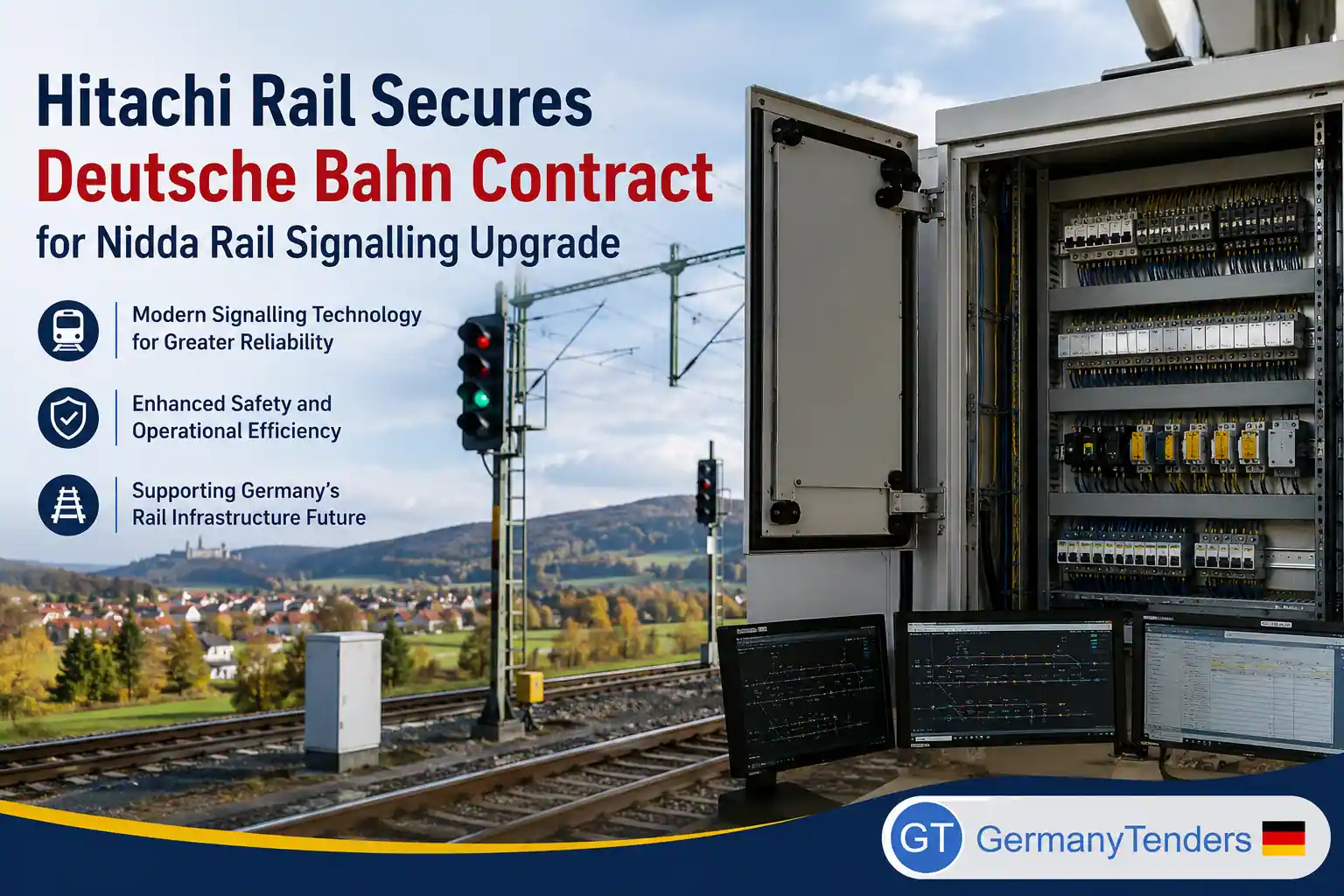
Germany Continues Rail Modernisation with Strategic Signalling Upgrade in Hesse
06 Jul 2026
IntroductionA small town in Hesse is about to get a railway signalling upgrade that says a lot about how Germany keeps its railways running. DB InfraGO AG, the company responsible for maintaining and modernising Germany's rail network, has awarded a contract to Hitachi Rail GTS Deutschland GmbH covering the Nidda line and a safety system upgrade at Altenstadt. It is not a headline grabbing mega-project. But it reflects the steady, less visible engineering work that keeps trains moving safely, and it shows how Germany's rail modernisation drive actually gets delivered on the ground. The award forms part of Germany's ongoing effort to modernise its railway infrastructure through targeted signalling improvements rather than only large scale construction projects. While the work focuses on a regional line in Hesse, it reflects the wider investment strategy of Deutsche Bahn to improve safety, operational reliability and network efficiency across the country. Why This Contract Matters Rail signalling rarely makes the news, yet it decides whether trains run on time and run safely. Every block adjustment and every interlocking upgrade is part of a much larger push to renew Germany's ageing rail infrastructure. This contract also shows how Deutsche Bahn buys specialised safety equipment. Not always through open tenders, but often through negotiated procedures with prequalified suppliers who already hold a qualification-system listing with the buyer. For businesses in the rail supply chain, that detail matters, because it shows how to get into position for future work by qualifying early rather than waiting for a public tender notice. Contract Overview The contract covers two related jobs on the same stretch of track in Hesse: Block adjustment to the electronic interlocking (ESTW-A) at Nidda, covering Strecke 3701. Local safety system upgrade tied to the electronic interlocking at Altenstadt. Both fall under the category of electrical signalling equipment for railways, the technology that manages train movements, switches and safety interlocks along a line. The work is scheduled to run from 12 June 2026 to 31 December 2026. Hitachi Rail GTS Deutschland GmbH, based in Ditzingen, was the only company to submit a tender and was confirmed as the winner on 26 June 2026. Key Contract Details Contracting Authority: DB InfraGO AG - Geschaftsbereich Fahrweg Winning Company: Hitachi Rail GTS Deutschland GmbH Country: Germany Location: Nidda, Wetteraukreis, Hesse Sector: Rail infrastructure and signalling Procedure Type: Negotiated without prior call for competition Contract Value: Not disclosed by the contracting authority Duration: 12 June 2026 to 31 December 2026 Award Date: 26 June 2026 CPV Codes: 34632200, 34632100, 34632300 TED Notice ID: 464769-2026 Tenders Received: 1 Project Scope An electronic interlocking (ESTW) is the digital control system that manages railway signals and track switches, helping prevent conflicting train movements. The block adjustment included in this contract will optimise train spacing on the Nidda line, while the local safety system upgrade at Altenstadt will strengthen operational safety for both railway staff and passengers. The scope centres on two connected signalling tasks. First, an adjustment of block sections tied to the electronic interlocking system serving line 3701 near Nidda, the equipment that governs how trains are spaced and routed safely along that stretch. Second, an upgrade to the local safety system linked to the electronic interlocking at Altenstadt, strengthening the safety layer that protects level crossings and track sections in that area. Together, these works are incremental but essential upgrades that keep a regional line compliant with current safety standards while supporting Germany's broader digital signalling rollout. About the Contracting Authority DB InfraGO AG is the infrastructure arm of Deutsche Bahn, responsible for Germany's rail network and stations. It was formed to give the country's rail infrastructure a stronger public interest mandate, separating network operation and maintenance from commercial train operations. Through its Fahrweg division, DB InfraGO manages thousands of kilometres of track, signalling systems and safety equipment across the country. About the Winning Company Hitachi Rail GTS Deutschland GmbH is based in Ditzingen, near Stuttgart, and is part of Hitachi Rail's global signalling and rail technology business. The company traces its roots to Thales' German rail signalling operations, which Hitachi Rail acquired as part of its global expansion into train control and signalling systems. In Germany, Hitachi Rail employs around 2,200 people across sites in Berlin, Arnstadt and Ditzingen, working on digital interlockings and smart rail technologies. The company is a close partner to Deutsche Bahn and is involved in the Digitale Schiene Deutschland programme, which aims to increase network capacity through digital signalling. Hitachi Rail has become one of Europe's leading suppliers of digital signalling and train control systems, supporting railway operators in improving network capacity, reliability and passenger safety through advanced signalling technologies. Procurement Insights This contract was awarded through a negotiated procedure without prior call for competition, permitted under German sector procurement rules for utility buyers like DB InfraGO. In plain terms, the buyer did not run a fresh public tender for this specific job. Instead, it selected a supplier from an existing qualification system, a pre-approved pool of vetted contractors first published in the EU Official Journal in October 2023. Additional Procurement Facts Procurement Directive: Directive 2014/25/EU (Utilities Procurement Directive) Nature of Contract: Supplies Award Criterion: Price (100%) Government Procurement Agreement (GPA): Covered EU Funding: No EU funding involved Framework Agreement: No Dynamic Purchasing System: No Publication Date: 6 July 2026 Only one tender was received, which is typical for this kind of specialised, safety-critical signalling work where few suppliers hold the technical qualifications required. The contract's value was withheld under German procurement transparency exceptions, on the grounds that disclosure could damage the winning contractor's legitimate business interests or distort fair competition between suppliers. Market and Industry Impact Rail signalling is a niche but strategically important market. Only a handful of global players, including Hitachi Rail, Siemens Mobility, Alstom and Thales, have the engineering capability and safety certifications to deliver this kind of work in Germany. This award reinforces Hitachi Rail's position as one of DB InfraGO's trusted signalling suppliers. Economic Significance Although the contracting authority has not disclosed the contract value, signalling upgrades remain an essential part of Germany's long-term railway investment programme. Projects of this nature help improve operational reliability while supporting continued demand for specialised signalling equipment, engineering services and railway technology across the sector. Opportunities for Suppliers For component manufacturers, cabling firms, civil works contractors and testing specialists, contracts like this one create secondary opportunities as subcontractors, even though subcontracting status here is not yet known. The bigger opportunity lies upstream. Companies wanting to compete for DB InfraGO signalling work should focus on getting listed in DB's qualification systems, since many such contracts are awarded through negotiated procedures drawing on pre-qualified pools rather than fresh open tenders. What Businesses Should Watch Further signalling and interlocking contracts along DB InfraGO's Hesse network. DB InfraGO's ongoing qualification-system announcements in the EU Official Journal. The pace of Germany's wider digital signalling programme across regional lines. Future DB InfraGO signalling projects published under the existing qualification system. Key Takeaways DB InfraGO awarded a rail signalling contract to Hitachi Rail GTS Deutschland for work in Nidda and Altenstadt, Hesse. The deal was signed on 26 June 2026, with work running through the end of the year. It followed a negotiated procedure, not an open tender, with only one bid submitted. Contract value was withheld under German transparency exceptions for commercially sensitive information. The award reflects the steady, specialist maintenance work behind Germany's rail modernisation push. The procurement follows Directive 2014/25/EU governing utility sector procurement in the European Union. The project is not financed by European Union funds and was awarded solely on price. Project Timeline Winner Selected: 26 June 2026 Contract Signed: 26 June 2026 TED Publication: 6 July 2026 Implementation Period: 12 June 2026 – 31 December 2026 Conclusion This is not a landmark infrastructure announcement, but it is a useful window into how Germany's rail network actually gets upgraded, one interlocking, one block section, one qualified supplier at a time. For businesses watching the rail sector, contracts like this signal where the real, recurring opportunities sit, not always in headline tenders, but in the qualification systems that quietly decide who gets called on next. Frequently Asked Questions 1. What is an electronic interlocking (ESTW)? An electronic interlocking is a computer based railway signalling system that controls signals and track switches. It helps ensure trains move safely and efficiently by preventing conflicting train routes. 2. What procurement rules governed this contract? The award was conducted under Directive 2014/25/EU, which regulates procurement by utility operators such as railway, water, energy and transport companies across the European Union. 3. What exactly is being upgraded in this contract? The contract covers an adjustment to the electronic interlocking system on the Nidda rail line and a safety system upgrade at the Altenstadt interlocking, both in Hesse, Germany. 4. Why wasn't this contract put out to open tender? DB InfraGO used a negotiated procedure permitted under EU and German utility sector procurement rules, drawing on a supplier qualification system it had already published in 2023. 5. How much is the contract worth? The value has not been disclosed. DB InfraGO cited German procurement law provisions protecting the winning contractor's commercial confidentiality. 6. Who is Hitachi Rail GTS Deutschland GmbH? It is Hitachi Rail's German signalling business, headquartered in Ditzingen, with roots in Thales' former German rail operations. It works closely with Deutsche Bahn on interlocking and digital signalling projects nationwide. 7. Does this contract involve EU funding? No. The notice confirms the project is not financed with EU funds. { "@context": "https://schema.org", "@type": "FAQPage", "mainEntity": [{ "@type": "Question", "name": "1. What is an electronic interlocking (ESTW)?", "acceptedAnswer": { "@type": "Answer", "text": "An electronic interlocking is a computer-based railway signalling system that controls signals and track switches. It helps ensure trains move safely and efficiently by preventing conflicting train routes." } },{ "@type": "Question", "name": "2. What procurement rules governed this contract?", "acceptedAnswer": { "@type": "Answer", "text": "The award was conducted under Directive 2014/25/EU, which regulates procurement by utility operators such as railway, water, energy and transport companies across the European Union." } },{ "@type": "Question", "name": "3. What exactly is being upgraded in this contract?", "acceptedAnswer": { "@type": "Answer", "text": "The contract covers an adjustment to the electronic interlocking system on the Nidda rail line and a safety system upgrade at the Altenstadt interlocking, both in Hesse, Germany." } },{ "@type": "Question", "name": "4. Why wasn't this contract put out to open tender?", "acceptedAnswer": { "@type": "Answer", "text": "DB InfraGO used a negotiated procedure permitted under EU and German utility sector procurement rules, drawing on a supplier qualification system it had already published in 2023." } },{ "@type": "Question", "name": "5. How much is the contract worth?", "acceptedAnswer": { "@type": "Answer", "text": "The value has not been disclosed. DB InfraGO cited German procurement law provisions protecting the winning contractor's commercial confidentiality." } },{ "@type": "Question", "name": "6. Who is Hitachi Rail GTS Deutschland GmbH?", "acceptedAnswer": { "@type": "Answer", "text": "It is Hitachi Rail's German signalling business, headquartered in Ditzingen, with roots in Thales' former German rail operations. It works closely with Deutsche Bahn on interlocking and digital signalling projects nationwide." } },{ "@type": "Question", "name": "7. Does this contract involve EU funding?", "acceptedAnswer": { "@type": "Answer", "text": "No. The notice confirms the project is not financed with EU funds." } }] }
View Details
Dorfner Catering Wins Contract to Supply Food Services for Paul Ehrlich Clinic in Germany
24 Jun 2026
The German Pension Insurance Knappschaft-Bahn-See (KBS) has awarded a catering services contract for the food supply of the Paul Ehrlich Clinic in Bad Homburg to Dorfner Menü Catering-Service + Organisations GmbH & Co. KG. The award marks an important procurement milestone in ensuring high-quality meal services for patients, staff, and visitors at one of Germany's key healthcare facilities.The contract was awarded on 18 May 2026 and covers the provision of comprehensive food and catering services for the clinic located in Bad Homburg vor der Höhe, Germany.Healthcare Catering Contract Awarded in GermanyAccording to the award notice, Dorfner Menü Catering-Service + Organisations GmbH & Co. KG was selected as the successful contractor for the food supply services tender issued by the German Pension Insurance Knappschaft-Bahn-See.The procurement falls under CPV Code 55500000 – Canteen and Catering Services and is referenced internally as "Food Supply Bad Homburg (ID: 2.533.445)." The contract focuses on ensuring the reliable delivery of meals and catering operations that support the daily functioning of the Paul Ehrlich Clinic.Healthcare catering contracts are essential for maintaining patient well-being, supporting nutritional requirements, and ensuring efficient food service management within medical facilities.Supporting Patient Care Through Quality Food ServicesFood services play a critical role in healthcare environments, where nutrition is directly linked to patient recovery, health outcomes, and overall satisfaction. Modern hospital catering providers are increasingly required to meet strict quality, hygiene, dietary, and sustainability standards.Through this contract, the clinic aims to maintain high service levels while ensuring efficient meal preparation, food distribution, and catering management for patients and healthcare personnel.The procurement reflects the continued investment by German healthcare institutions in professional outsourced services that enhance operational efficiency and patient experience.Dorfner Strengthens Presence in Healthcare CateringDorfner Menü Catering-Service + Organisations GmbH & Co. KG, headquartered in Germany, is a well-established provider of catering and facility-related services. The company has extensive experience delivering food services across healthcare facilities, public institutions, and commercial organizations.Winning the Paul Ehrlich Clinic contract further strengthens Dorfner's position in Germany's healthcare catering market and highlights its capability to meet the demanding requirements of medical service providers.Impact on Germany's Healthcare Services SectorThe award demonstrates the importance of specialized catering providers in supporting healthcare infrastructure. Reliable food service operations help healthcare facilities focus on their core mission of patient care while ensuring compliance with nutritional and operational standards.The contract is also expected to contribute to local economic activity through food supply chains, logistics services, and employment opportunities associated with catering operations.Looking AheadWith the contract now in place, Dorfner Menü Catering-Service + Organisations GmbH & Co. KG is expected to deliver comprehensive food supply services for the Paul Ehrlich Clinic in Bad Homburg. The partnership is anticipated to support high-quality patient care while ensuring efficient and sustainable catering operations for the healthcare facility.#Germany contract award, #Paul Ehrlich Clinic, #healthcare services, #hospital food supply contract, #Dorfner Catering, #Bad Homburg clinic, #catering services Germany, #healthcare procurement, #awarded tenders, #procurement news Germany, #government contracts, #food service management, #hospital catering contract, #public sector procurement, #healthcare infrastructure, #tender results, #contract award news, #canteen services, #medical facility catering
View Details
Public Procurement Act 2026 - New Rules for Federal Public Contracts in Germany
26 Mar 2026
Germany has introduced a significant reform in public procurement through the Fair Wages Act 2026 Germany, approved by the German Bundestag. This legislation strengthens the connection between federal contract awards and compliance with collective wage agreements.The primary goal is to promote fair pay standards and eliminate “wage dumping,” where companies undercut legally agreed wage levels to gain competitive advantage in public tenders.What Does the New Law Regulate?At its core, the Act makes it mandatory for companies bidding on certain federal contracts to comply with applicable collective bargaining agreements.Key Highlights:- Applies to federal public contracts worth €50,000 or more In some cases, thresholds increase to €100,000 Strong focus on:- Construction contracts Service-based contracts Pure supply/delivery contracts are currently excluded Introduces stricter documentation and compliance checks This means tariff compliance is now a critical eligibility requirement in federal procurement procedures.Impact on Public TendersThe new law significantly changes how companies participate in tenders.Companies must now:- Submit official declarations of wage compliance Maintain proper supporting documentation Be ready for increased audits and inspections Accept potential penalties for non-compliance This adds complexity, especially for:- Construction companies Service providers Subcontractors managing multiple contracts Monitoring tender values and requirements becomes more important than ever.Practical Implications for BusinessesThe procurement landscape is becoming more structured and data-driven. Contract value will now determine not only the procedure but also compliance obligations.Businesses should:- Track procurement threshold values carefully Strengthen internal wage documentation systems Review tender documents in detail Ensure strict compliance with deadlines and legal requirements Combined with existing procurement laws, this creates additional layers of compliance-especially in technical and construction sectors.Managing Federal Procurement EfficientlyWith increased compliance requirements, companies must adopt smarter ways to track opportunities.Using AI-based platforms like Vergabepilot.AI can help businesses:- Filter tenders based on contract value Identify contracts requiring tariff compliance Detect updates and corrections early Automate tender monitoring processes This improves efficiency while reducing compliance risks.ConclusionThe Fair Wages Act 2026 marks a major shift in Germany’s public procurement system. Companies must now focus on:- Strong internal compliance strategies Accurate documentation Proactive tender monitoring Businesses that adapt early will gain a competitive advantage and ensure smoother participation in federal tenders. #GermanyTenders #FairWagesAct2026 #PublicProcurement #GovernmentContracts #ConstructionTenders #EUProcurement #TenderCompliance #BiddingProcess #ProcurementLaw #GlobalTenders
View Details